
Coating ink additive professional manufacturer
No.160-11,Xiangyuan Road,Jingjin Science and Technology Valley Inductrial Park,Wuqing District,Tianjin Province,China
jeffrey@rk-chem.com
+86 18526852692
In the production and application of water-based industrial coatings, wood coatings, automotive finishes, and inks, defect issues like microbubbles, macro-bubbles, pinholes, cratering, and popping are constant headaches for formulators. When facing foam problems, the intuitive reaction is often to "keep increasing the defoamer dosage."
However, effective defoaming does not depend on the defoamer alone. It is determined by a complex combination of the coating system, formula compatibility, manufacturing process, application method, and curing environment. Indiscriminately adding more defoamer not only fails to root out the problem, but often triggers secondary defects like loss of gloss, cratering, and poor intercoat adhesion.
This article breaks down the 5 core factors influencing coating defoaming and provides a practical, step-by-step troubleshooting checklist.
Resin Type & Chemical Reactions
Water-based vs. Solvent-based: Water-based systems are inherently harder to defoam because emulsifiers introduced during emulsion polymerization strongly stabilize foam.
Water-based Polyurethane (PU): Residual -NCO groups react with water to generate CO2 gas, creating hard-to-eliminate chemical reaction bubbles.
Solvent-free Epoxy & High-Solids Systems: High viscosity drastically slows down bubble rising speeds according to Stokes' Law, trapping air inside the wet film.
System Polarity & Surface Tension Balance
Resin polarity determines defoamer compatibility. If a defoamer is too compatible, it cannot migrate to the air-liquid interface to break bubbles. If it is too incompatible, it causes severe cratering, fisheyes, and loss of gloss.
Viscosity & Rheology
Higher viscosity and thixotropy make it harder for microbubbles to rise and escape before the film sets.
Interference from Other Surfactants
Wetting agents, dispersants, and leveling agents are all surface-active agents. If incorrectly selected or overused, they form a tough elastic film at the bubble interface, stabilizing the foam and canceling out the defoamer's effect.
Defoamer Selection, Dosage & Staged Addition
Staged Addition Strategy: High shear during the grinding stage incorporates large amounts of air, requiring shear-resistant antifoamers. The letdown stage involves lower shear and requires fast-acting defoamers and air release agents. Staged addition is always preferred over adding all defoamer at the end.
Dosage Window: Typical addition levels range from 0.05% to 0.5%. High-build screen printing or flooring systems may require higher dosages.
Pigment & Filler Air Entrapment
Powders carry trapped air. High oil-absorption pigments, if inadequately wetted and dispersed, continuously release microbubbles into the system during milling and storage.
Manufacturing Process: High-speed prolonged stirring, pumping, and pipe circulation mechanically introduce massive amounts of air. Defoamers must be dispersed under adequate shear; agglomerated defoamer droplets directly cause cratering.
Application Methods:
Rolling/Brushing: Mechanically churns in the highest amount of air, placing the maximum demand on macro-bubble and microbubble release.
Air & Airless Spraying: Atomization helps burst macro-bubbles, but excessive single-pass film thickness easily traps air inside.
Flexo/Gravure Printing & Self-Leveling: Requires rapid microbubble elimination to prevent surface defects.
Baking & Curing Profiles: Ramping up oven temperatures too quickly causes the surface layer to skin over first. Trapped solvents or air cannot escape, erupting into pinholes and popping.
Porous Substrates: Substrates like concrete or wood contain air in their pores that expands when coated, acting as a hidden bubble generator.
When bubble or pinhole defects occur, follow this priority order instead of blindly adding more defoamer:
[Step 1: Application & Environment] ──► Check film thickness, baking profile, and substrate sealing. │ ▼[Step 2: Surfactant Compatibility] ──► Evaluate if wetting/dispersing/leveling agents are stabilizing foam. │ ▼[Step 3: Viscosity & Rheology] ──► Reduce application viscosity to extend open time for air release. │ ▼[Step 4: Addition Process] ──► Ensure adequate shear; switch to staged addition (grinding vs. letdown). │ ▼[Step 5: Defoamer Dosage Tuning] ──► Fine-tune defoamer loading within the recommended dosage window.
Defect Symptom | Probable Cause | Actionable Solution |
Fine pinholes across dried film | Flash-off too fast (surface skinning), or substrate releasing air | Adjust baking temperature gradient; apply a sealer coat on porous substrates. |
Quick foam breakdown, but large bubbles in dried film | High application viscosity, or heavy air entrapment during rolling | Reduce application viscosity; use an effective silicone copolymer emulsion defoamer. |
Good defoaming, but severe cratering / fisheyes | Defoamer compatibility too poor, poor dispersion, or over-dosing | Increase shear during incorporation; switch to a well-balanced emulsion defoamer. |
Persistent foam during grinding stage | Insufficient shear resistance of the defoamer, or poor pigment wetting | Add a shear-resistant defoamer at the mill base; improve dispersant wetting performance. |
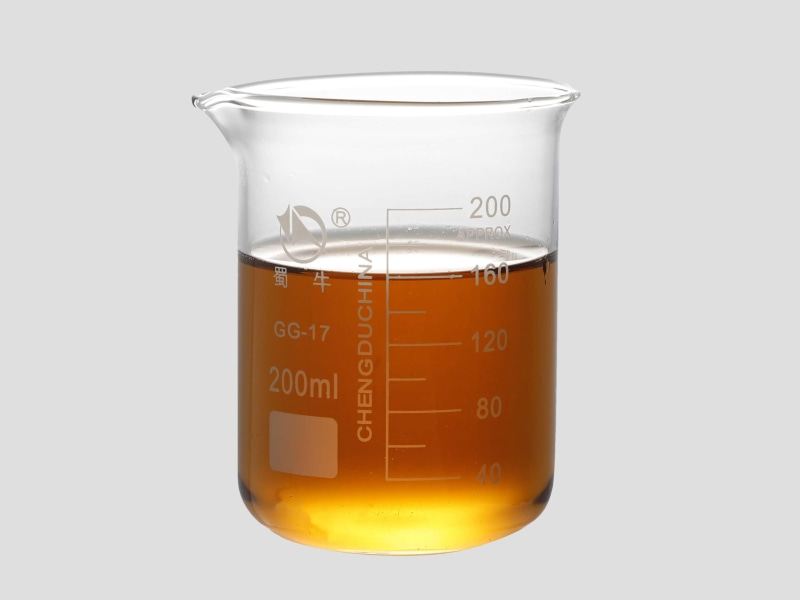
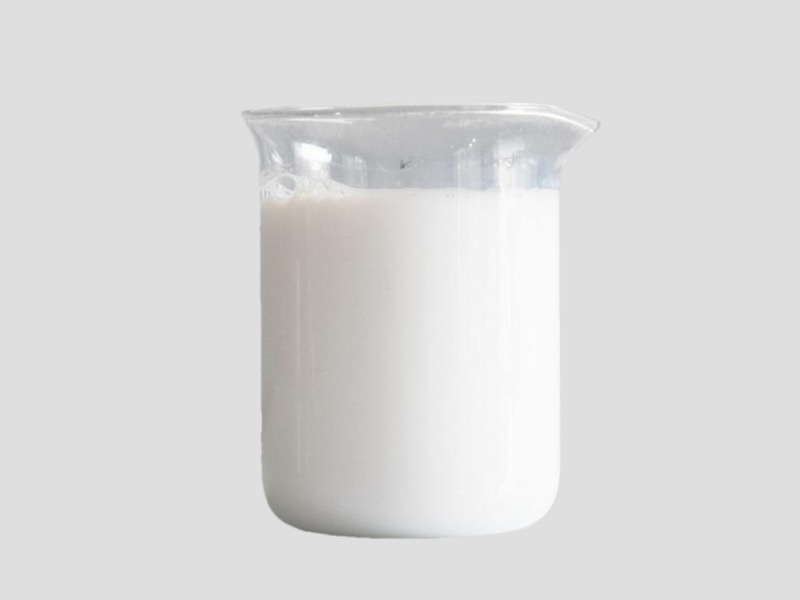
To address complex foam challenges across various water-based systems, Ruike Chemical supplies RP-6994, a highly effective water-based emulsion defoamer
Chemical Structure: Advanced silicone copolymer emulsion containing active defoaming particles (30% active content, white thixotropic liquid)
Key Performance Features:
Dual Action: Highly effective at eliminating both macro-bubbles and microbubbles
Excellent Miscibility: Delivers strong defoaming power while maintaining exceptional compatibility to prevent surface defects like cratering
Versatile Application: Ideal for medium to low viscosity systems
Target Applications: Water-based industrial paints, water-based wood coatings, water-based automotive coatings, and water-based inks
Usage & Recommended Dosage: 0.2% - 0.5% on total formulation based on supplied form
Defoaming is a holistic system engineering challenge. Balancing resin choice, surfactant loading, application viscosity, and curing conditions is essential to achieving a flawless finish.
To explore our full range of water-based additives—including defoamers, polymeric dispersants, and wetting agents—visit our technical portal at
Visit
Contact our technical application team today to optimize your coating formulations and request a free laboratory evaluation sample


Ruike’ growing reputation in the industry is largely attributed to its commitment to provide a wide range of products and highly specialized service.
No.160-11,Xiangyuan Road,Jingjin Science and Technology Valley Inductrial Park,Wuqing District,Tianjin Province,China
jeffrey@rk-chem.com
+86 18526852692
 English
 English
 Russian
 French
 Spanish
 Portuguese
 Arabic