
Coating ink additive professional manufacturer
No.160-11,Xiangyuan Road,Jingjin Science and Technology Valley Inductrial Park,Wuqing District,Tianjin Province,China
jeffrey@rk-chem.com
+86 18526852692
In today's industrial coatings, protective floorings, and heavy-duty anti-corrosion sectors, solvent-free (solvent-less / zero-VOC / 100% solid content) systems have become the absolute driving force of green environmental transformation. However, formulating solvent-free coatings often presents paint chemists with two physically opposing, headaches-inducing challenges:
Extreme Difficulty in Air Release (Foam Susceptibility): Due to high initial viscosity and the complete absence of volatile solvents, solvent-free systems trap massive amounts of air during manufacturing and spraying
Extreme Difficulty in Sag Resistance on Vertical Surfaces (Sagging Susceptibility): To achieve single-coat wet-film builds of several hundred microns or even millimeters, the paint must possess intense thixotropy and sag resistance
How can you establish a "flawless vertical sag-resistance profile" while simultaneously purging "internal hidden micro-bubbles"? This article explores the physical chemistry of rheology and interfacial mechanics, and presents a system-level co-formulation strategy using target additives.
When tackling entrapped air in solvent-free epoxy or polyurethane lines, avoid adding raw mineral oil defoamers. Because of poor compatibility in highly viscous, solvent-free resins, traditional mineral oils easily separate or migrate to the surface as oil slicks, ruining inter-coat adhesion and destroying surface gloss.
For solvent-free and solvent-borne high-viscosity formulations, chemists require a specialized additive that delivers both aggressive bubble-rupturing kinetics and excellent system compatibility
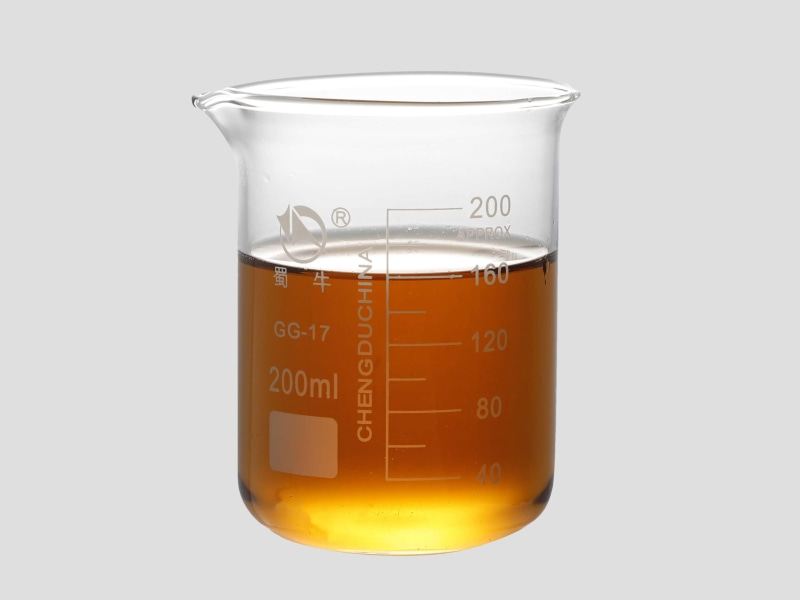
Dual-Action Foam Inhibition & Elimination: RP-6068 is a high-performance polyether-modified organosilicone compound (containing active hydrophobic particles) with a solid content of ≥95%. It exhibits highly aggressive dynamic bubble-bursting speed while maintaining a stable, mild, and micro-compatible dispersion state in solvent-free matrices
Purging Hidden Micro-Bubbles: The embedded hydrophobic particles migrate into the thick coating layer, forcing microscopic bubbles to coalesce, rise, and rupture during the wet-stage leveling phase, avoiding pinholes in the cured film
Application Guidelines: The recommended dosage of RP-6068 is 0.2% to 1.0% of the total formulation
To maintain a true "zero-VOC" and solvent-free profile, rheology additives must not introduce low-boiling organic solvents. The most effective approach is to construct a "smart thixotropic network" that thins under application shear but builds gel-strength instantly upon deposition, achieved by combining a solvent-free polyamide wax powder, a hydrophobic fumed silica, and a liquid polyamide flow activator
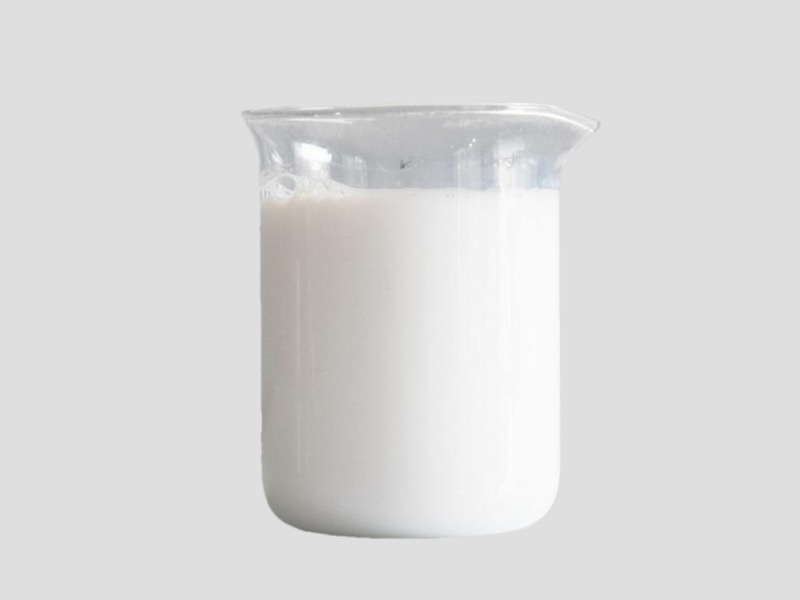
Technology Profile: F870 is a highly thixotropic powder agent based on specially modified polyamide wax, with a precision-controlled particle size of ≤15um. It is engineered specifically for solvent-free, eco-friendly systems
Sag and Sedimentation Resistance: It provides outstanding sag resistance and anti-settling properties without seeding, graining, or swelling during paint storage
Application Guidelines: Recommended at 0.5% to 3.0% of the total formulation weight
Technology Profile: T-972 is a high-purity, nanostructured fumed silica that has undergone hydrophobic organic surface treatment
Thixotropic Anti-Run Performance: Under spraying or brushing shear, these physical hydrogen bonds break instantly, lowering system viscosity for excellent flow and application properties
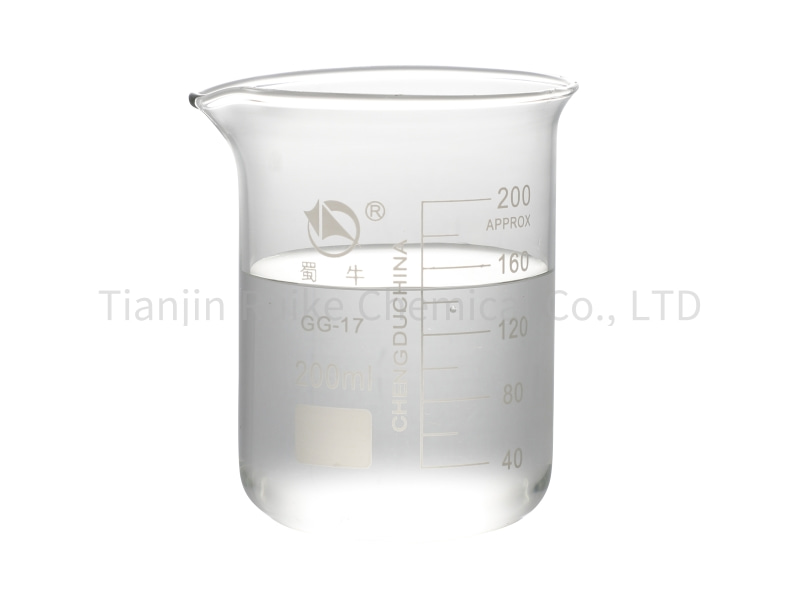
Technology Profile: RT-3415 is a highly active liquid polyamide solution engineered specifically to boost the sag limits of solvent-free and solvent-borne polyurethane, epoxy, and acrylic lines
"Unbreakable" Network Design: It establishes a complementary thixotropic network that does not easily fail or break permanently under high mechanical shear
Application Guidelines: Recommended at 0.2% to 1.0% by weight
In actual formulation practice, defoamers and thixotropic agents often work against one another: over-dosing a defoamer can lower the system's interfacial yield strength, weakening the thixotropic network and triggering sag; conversely, over-dosing thixotropes can trap micro-bubbles under an excessively high static yield value, resulting in dry-film pinholes
To successfully resolve this double dilemma, follow these system-level synergy principles:
"Base Thixotropy & Grind-Stage Defoaming":Incorporate F870 Polyamide Wax Micropowder during the grinding stage
"Liquid-Powder Co-Rheology in Letdown":During the letdown phase, introduce the combination of T-972 Hydrophobic Fumed Silica and RT-3415 Rheology Liquid to fine-tune the final viscosity and yield point
"Physical De-Aeration & Application Care":
Since solvent-free systems cannot rely on solvent evaporation to release air, physical venting is crucial. After compounding, vacuum-defoam the mixture for 10 to 20 minutes to extract micro-bubbles. During application, control single-pass wet film builds within recommended parameters, and maintain ambient temperatures around 20–30°C to allow optimal leveling and air-release windows.
Developing solvent-free industrial coatings is an exercise in balancing opposing physical dynamics.
To eliminate stubborn internal micro-bubbles and prevent adhesion loss, specify Ruike RP-6068
To establish a 100% active, highly thixotropic anti-sagging foundation, deploy Ruike F870 Polyamide Wax Powder
To reinforce rheological performance and achieve extreme vertical thickness builds, combine Ruike T-972 Fumed Silica and RT-3415 Liquid
As a specialized global supplier of high-performance paint and ink additives, Tianjin Ruike Chemical Trade Co., Ltd. (Ruike Chemical) is dedicated to securing technical success for your solvent-free formulations. Visit our digital portal at
Experiencing sag on vertical industrial coatings? Troubled by pinholes in thick epoxy floors?
Visit


Ruike’ growing reputation in the industry is largely attributed to its commitment to provide a wide range of products and highly specialized service.
No.160-11,Xiangyuan Road,Jingjin Science and Technology Valley Inductrial Park,Wuqing District,Tianjin Province,China
jeffrey@rk-chem.com
+86 18526852692
 English
 English
 Russian
 French
 Spanish
 Portuguese
 Arabic