
Coating ink additive professional manufacturer
No.160-11,Xiangyuan Road,Jingjin Science and Technology Valley Inductrial Park,Wuqing District,Tianjin Province,China
jeffrey@rk-chem.com
+86 18526852692
In the formulation of high-performance water-borne industrial coatings, inks, pressure-sensitive adhesives, and textile binders, improving the polymer's internal cohesion strength, chemical resistance, and substrate adhesion remains a primary engineering challenge. While water-borne polyurethane dispersions (PUDs) and acrylic emulsions provide strong backbone film flexibility, they are inherently thermoplastic. To withstand industrial-grade mechanical abrasion, harsh solvent rubbing, and long-term water immersion, these polymers must undergo chemical modification via effective external crosslinkers.
Among carboxyl-reactive crosslinkers, Trifunctional Aziridines and Polycarbodiimides have gained massive industry traction. This article analyzes their physical mechanisms using Ruike Chemical’s specialized products—RT-3917 and RG-3302—and provides a systematic breakdown of how these technologies differ from traditional Water-Borne Isocyanate hardeners.
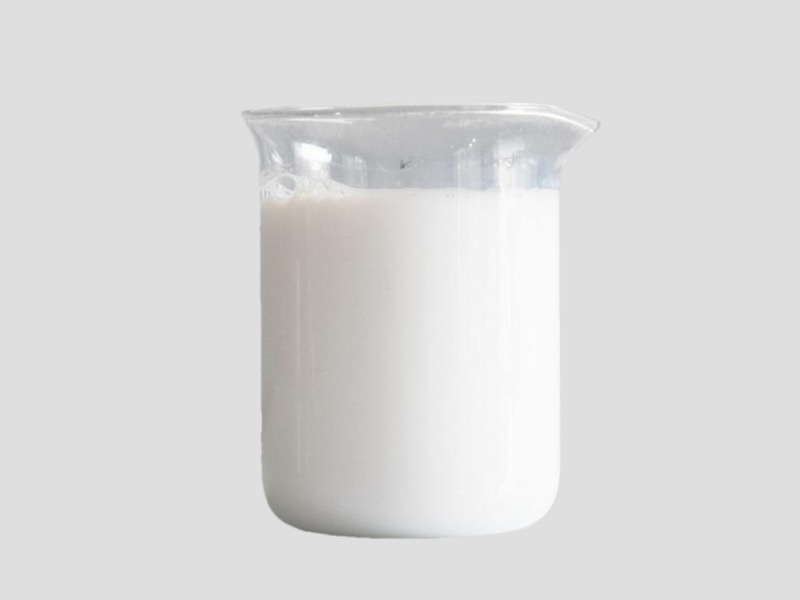
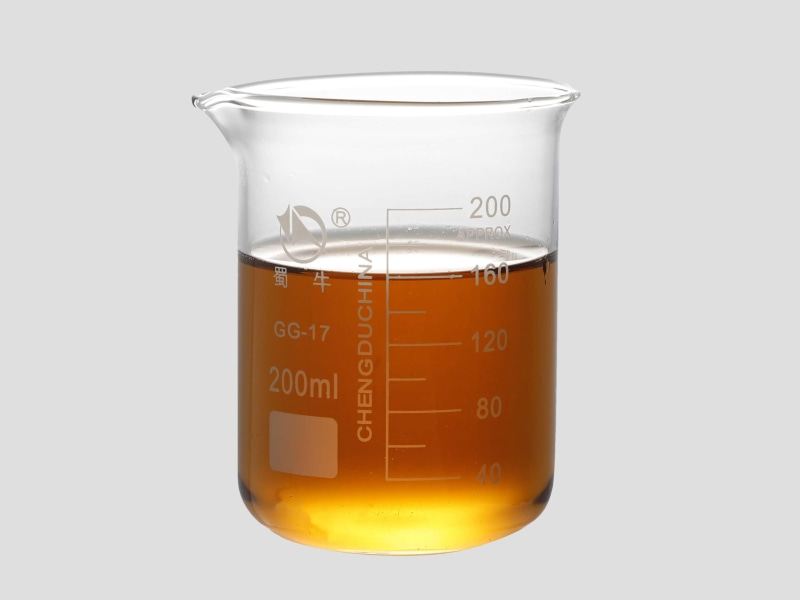
RT-3917 is a high-purity (solid content >99%) multifunctional aziridine crosslinking agent designed to deliver extreme ambient-temperature cure speeds and rapid property development
Crosslinking Mechanism: Operating via its highly strained methyl aziridine groups (containing 6.16 moles per kilogram), RT-3917 reacts directly with the carboxylic acid groups (COOH) on the resin backbone through an acid-catalyzed ring-opening reaction to form stable amino-ester linkages
Core Benefits: It delivers a rapid boost to the matrix's resistance to washing, scrubbing, chemicals, and alcohol double rubs, while significantly enhancing adhesion profiles on difficult substrates
Processing Constraints: It functions strictly as a two-component (2K) system. Once blended into the emulsion, the pot life spans roughly 8 to 12 hours before irreversible gelation occurs
RG-3302 is a polymerized carbodiimide curing agent (50% solid content in a PMA solvent carrier) engineered for formulators requiring an extended application window and a clean toxicological profile
Crosslinking Mechanism: The carbodiimide functional blocks undergo a highly selective nucleophilic addition reaction with available carboxylic groups in the resin, yielding stable N-acylurea crosslinked nodes
Core Benefits: RG-3302 possesses excellent water dispersibility and operates on a "latent room-temperature reaction, rapid heat-activated lock" kinetic profile
Regulatory Profile: Due to its high molecular weight polymeric structure, RG-3302 serves as a non-sensitizing replacement for traditional low-molecular-weight crosslinkers and delivers superior resistance to photochemical yellowing compared to aminoacrylate-based alternatives
Technical Metric | Trifunctional Aziridine RT-3917 | Polycarbodiimide RG-3302 |
Functional Density | Trifunctional, small molecular radius, exceptionally high active site density | Multifunctional Polymer, long-chain backbone architecture |
Pot Life Window | Short (Strictly recommended for use within 8 to 12 hours post-mixing) | Extremely Long (Dormant at room temp, stable viscosity, excellent open time) |
Curing Requirements | Ultimate Room-Temperature Curing (15-25Cstandard; baking improves results) | Heat-Activated / Forced Air Drying (Reaction kinetics accelerate heavily as temperature rises) |
Safety & Handling | Corrosive properties with inhalation and sensitization risks; requires full PPE | Non-toxic, Non-sensitizing, ideal for eco-labeled and consumer-facing upgrades |
Yellowing Resistance | Prone to minor amber discoloration under high baking or prolonged UV exposure | Excellent, vastly outperforming amino-type crosslinkers under thermal strain |
Primary Markets | 2K leather topcoats, structural adhesives, and fast-stacking water-borne industrial primers | Automotive interiors, premium wood varnishes, and single-pack (1K) hydrolysis-resistant coatings |
Formulation engineers frequently rely on hydrophilic-modified polyisocyanates (polyurethane hardeners) for high-performance 2K water-borne finishes. However, contrasting carboxyl-reactive agents like RT-3917 and RG-3302 against water-borne isocyanates reveals fundamental differences in underlying chemistry and processing limits:
RT-3917 & RG-3302 (Carboxyl Targets): These crosslinkers specifically target the carboxylic acid groups (COOH) on the resin
Water-Borne Isocyanates (Hydroxyl Targets): The active isocyanate groups (NCO) must find hydroxyl groups (OH) on the resin backbone to form polyurethane links. This forces formulators to source specialized, expensive hydroxyl-functionalized secondary emulsions (like water-borne OH-acrylics), complicating the raw material matrix and demanding strict stoichiometric controls .
Carboxyl Crosslinkers (Water-Inert): RT-3917 and RG-3302 display zero chemical reactivity toward water molecules. They disperse smoothly into the aqueous phase and prioritize bonding with the polymer chains
Water-Borne Isocyanates (Hydro-Reactive): The $-\text{NCO}$ group reacts with water. This side reaction is unavoidable in water-borne applications and splits the isocyanate into an amine while releasing carbon dioxide gas. In thick-coat applications or high-humidity environments, this trapped CO2 cannot escape before surface-drying occurs, leading to micro-pinholes, blistering, craters, or severe gloss loss.
Water-Borne Isocyanates: Because they constantly react with the ambient water matrix, their working pot life is very narrow (typically 4 to 6 hours). They must be mixed manually on-site right before application and can never be used to formulate pre-packaged, single-pack (1K) commercial goods.
Carboxyl Crosslinkers:
RT-3917 remains stable in aqueous liquids if the formulation pH is adjusted to a stable, mildly alkaline range of 8.0 to 9.5, easily offering a reliable 8-12 hour working window without water-induced degradation
RG-3302 takes this further. Its room-temperature latency allows it to be pre-mixed directly into compatible resin packages at the manufacturing plant without altering in-can viscosity
In summary, while water-borne isocyanates remain highly effective for building gloss and fullness in classic 2K polyurethanes, carboxyl-reactive crosslinkers offer distinct advantages when dealing with non-hydroxyl resins, thick coats prone to pinholes, or applications demanding extreme hydrolysis resistance.
For fast room-temperature drying, immediate early hardness development, and high-density scrub resistance, select Trifunctional Aziridine RT-3917 and apply within its 8-12 hour window
For eco-labeled configurations requiring zero skin-sensitization hazards, an extended processing window, or high thermal yellowing resistance under forced baking, transition your formula to Polycarbodiimide RG-3302
As a premier global supplier of high-performance industrial chemical solutions, Tianjin Ruike Chemical Trade Co., Ltd. (Ruike Chemical) supports international coatings, inks, and adhesives manufacturers. Our official technical platform,
Are you encountering high pinhole rates from water-borne isocyanates, or seeking a non-toxic upgrade to traditional crosslinking agents?
Visit our technical window at
www.rk-chem.com to analyze product documentation or consult directly with our application engineers to request a free custom evaluation sample kit of RT-3917 and RG-3302 tailored to your specific resin chemistry today!


Ruike’ growing reputation in the industry is largely attributed to its commitment to provide a wide range of products and highly specialized service.
No.160-11,Xiangyuan Road,Jingjin Science and Technology Valley Inductrial Park,Wuqing District,Tianjin Province,China
jeffrey@rk-chem.com
+86 18526852692
 English
 English
 Russian
 French
 Spanish
 Portuguese
 Arabic