
Coating ink additive professional manufacturer
No.160-11,Xiangyuan Road,Jingjin Science and Technology Valley Inductrial Park,Wuqing District,Tianjin Province,China
jeffrey@rk-chem.com
+86 18526852692
In waterborne coating formulation design, Substrate Wetting Failure and Craters / Fish-eyes are common film defects that challenge formulation engineers. The root cause lies in the exceptionally high surface tension of pure water (≈ 72.8mN/m at 25°C), which significantly exceeds that of most industrial substrates and surface contaminants:
Common Industrial Substrates Surface Energy: Steel/Aluminum (35--45mN/m), Plastics such as PP/PE (30--34mN/m), Aged paint films/Recoating layers (30--38mN/m).
Oils and Release Agents: Residual stamping oils, anti-rust oils, or silicone mold release agents on substrates typically have surface energies below 25mN/m.
A liquid coating can only spread spontaneously when its static surface tension is reduced below the critical surface energy of the substrate. The primary mission of a substrate wetting agent is to drastically lower this interfacial static surface tension.
When encountering cratering issues, many formulators habitually increase the dosage of standard leveling agents (such as polyether-modified siloxane leveling additives). However, this often fails to solve the problem. The two classes of additives operate on fundamentally different mechanisms:
Comparison Dimension | Substrate Wetting Agent | Standard Leveling Agent |
Primary Target Interface | Coating-to-Substrate Interface | Coating-to-Air Interface |
Key Performance Indicator | Drastically lowers Static Surface Tension | Lowers dynamic surface tension; balances surface tension gradients across the film |
Primary Function | Promotes spontaneous film spreading over low-energy substrates; eliminates craters and fish-eyes | Eliminates orange peel and brush marks; improves overall film smoothness and gloss |
Consequence of Misuse | Replacing a leveling agent directly with a wetting agent may result in insufficient surface smoothness | Cannot lower static surface tension sufficiently, leaving craters and edge crawling unresolved |
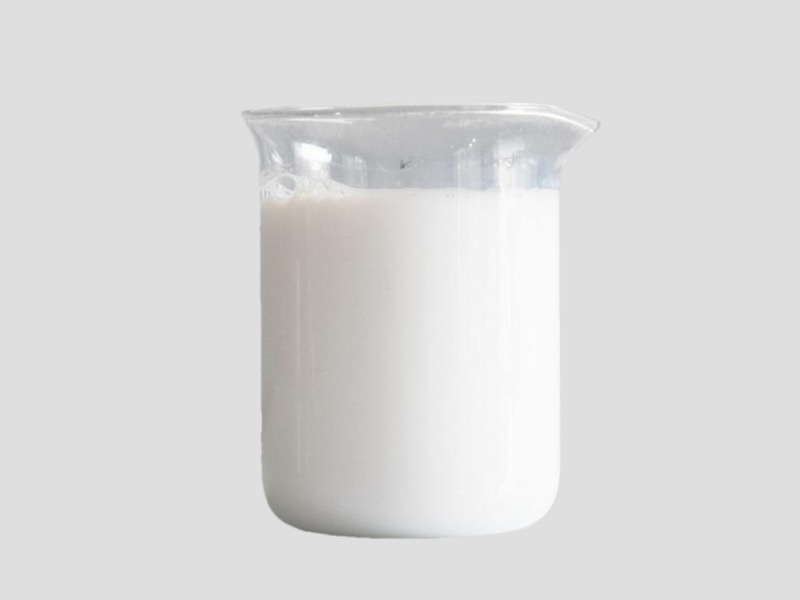
RK-8319 is a high-performance organosiloxane copolymer wetting agent with 100% active content. It exhibits excellent compatibility and versatility in both waterborne and solvent-borne systems.
Core Advantages: Exceptional wetting power and anti-cratering performance, drastically reducing the static surface tension of the system. It also maintains good recoatability, high-temperature resistance, and interlayer adhesion.
Formulation Tip: Due to its ultra-high surface tension reduction efficiency, formulators should monitor potential foam stabilization in bubble-sensitive systems and pair it with an appropriate defoamer.
Recommended Applications: Automotive coatings, general industrial paints, plastic coatings, wood and furniture finishes, architectural coatings, inkjet inks, release films, and glass substrates. Recommended dosage: 0.1% – 1.0% on total formulation.
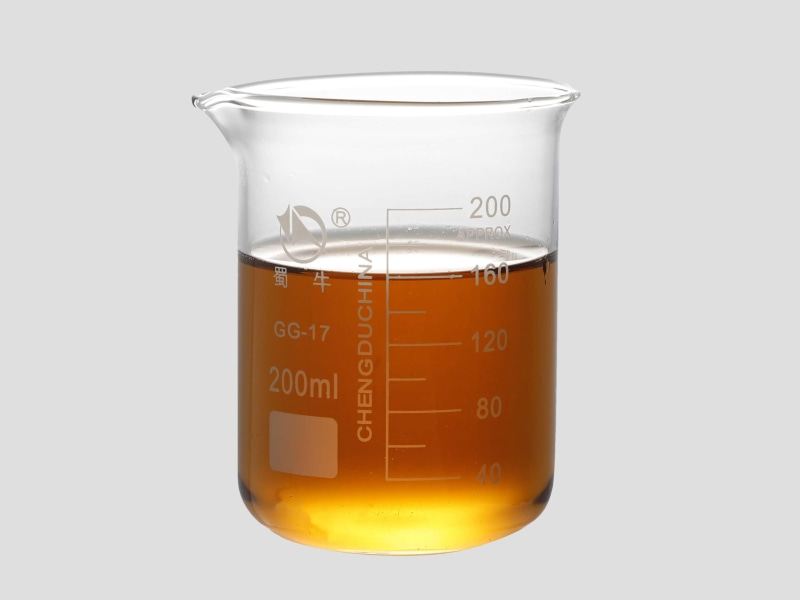
RK-8303 is a non-ionic ethoxylated acetylenic diol surfactant (HLB value: 13, Cloud Point: >51°C) that combines wetting power with low-foaming and foam-suppressing properties.
Core Advantages: Excellent low-foaming/defoaming performance, superior recoatability, and inter-coat adhesion without any risk of silicone contamination. Its high cloud point makes it suitable for high-temperature baking systems while maintaining chemical stability across varying pH conditions.
Formulation Tip: Its static surface tension reduction limit is slightly less aggressive than silicone additives. On substrates contaminated with heavy anti-rust oils or extremely low surface energy, its standalone wetting power may require supplementation.
Recommended Applications: Industrial topcoats, waterborne pressure-sensitive adhesives (PSA), inkjet inks, fountain solutions, electroplating baths, and latex dipping where strict low-foaming and recoatability are required.
To assist formulation engineers in quick additive selection, the matrix below outlines recommended additive strategies across typical application scenarios:
Scenario / Substrate Type | Preferred Wetting Agent | Selection Logic & Technical Advice |
Cast Iron / Aluminum Alloys / Lightly Oiled Metals | RK-8319 (Silicone) | Powerful anti-cratering capability. Maximizes its ultra-low surface tension reduction and high-temperature adhesion properties. |
Multi-layer Topcoats / Direct-to-Metal (DTM) / Recoat-Sensitive Systems | RK-8303 (Acetylenic Diol) | Low-foaming with excellent recoatability. Eliminates silicone contamination risks and ensures reliable inter-coat adhesion. |
Plastic Substrates (ABS, PC, Treated PP) / Film Coatings | RK-8319 or RK-8319 / RK-8303 Blend | Combines low surface energy spreading with low-foam levelling performance. A 0.2% – 0.5% ladder study is recommended. |
Dip Coating / Coil Coatings / High-Speed Spraying | RK-8303 (Acetylenic Diol) | Leverages dynamic wetting and dual defoaming/foam-suppressing properties to prevent air entrapment during high-speed application. |
Synergistic Formulation Tip:
In waterborne industrial coatings, beyond substrate wetting, pigment dispersion stability directly dictates anti-corrosion and film appearance. During the grinding stage, we recommend pairing these wetting agents with RD-9617 Polymeric Dispersant from our sister brand,
. RK-CHEM (rk-chem.com) significantly reduces mill-base viscosity and prevents pigment re-flocculation. Working synergistically with RK-8319 or RK-8303, it delivers an optimal balance of wetting, dispersion, and leveling. For more technical documentation, please visit RD-9617 . rk-chem.com
Follow a Structured Troubleshooting Order:
Substrate Pretreatment Inspection (Cleaning / Degreasing) →Wetting Agent Selection & Dosage Ladder Test → Defoamer Compatibility Testing → Equipment & Pipeline Contamination Check.
Prioritize Proper Pretreatment:
Wetting additives can only mitigate minor oil contamination or modest surface energy gaps. If substrates carry heavy mold release agents or thick anti-rust oils, physical cleaning and degreasing processes must be improved.
Balance Defoaming and Wetting:
Strong silicone wetting agents (such as RK-8319) may interact with highly hydrophobic defoamers, potentially triggering craters or pinholes. Always perform a dosage ladder trial starting at 0.1% to find the exact performance threshold for your system.
For technical data sheets (TDS), samples, or custom additive solutions, contact our technical service team via


Ruike’ growing reputation in the industry is largely attributed to its commitment to provide a wide range of products and highly specialized service.
No.160-11,Xiangyuan Road,Jingjin Science and Technology Valley Inductrial Park,Wuqing District,Tianjin Province,China
jeffrey@rk-chem.com
+86 18526852692
 English
 English
 Russian
 French
 Spanish
 Portuguese
 Arabic