
Coating ink additive professional manufacturer
No.160-11,Xiangyuan Road,Jingjin Science and Technology Valley Inductrial Park,Wuqing District,Tianjin Province,China
jeffrey@rk-chem.com
+86 18526852692
In the application of waterborne industrial coatings, flash rust is one of the most frustrating early-stage film defects encountered by formulators and applicators. When applied to reactive metal substrates—such as steel, cast iron, or alloy steel—a waterborne coating often develops dark reddish-brown or yellowish corrosion spots within minutes during the drying process.
Flash rust not only ruins the initial appearance of the coating but also compromises long-term adhesion and leads to premature anti-corrosion failure.
Understanding why flash rust occurs and how to select the right flash rust inhibitor is critical to developing high-performance, defect-free waterborne industrial systems.
Flash rust occurs primarily during the wet film drying phase—specifically during the critical window between paint application and water evaporation. The root cause is an electrochemical oxidation-reduction process on the metal surface driven by several factors:
Pure water has high polarity. When the wet coating film contacts the metal substrate, water molecules react with free iron atoms on the surface in the presence of dissolved oxygen. This initiates rapid oxidation (Fe→Fe2+ + 2e-), forming hydrated iron oxides (rust) that bleed into the wet film.
If relative humidity (RH) is high (> 80%) or temperatures are low, water evaporation slows down dramatically. The longer the wet paint film remains in liquid contact with the reactive metal surface, the greater the likelihood and severity of flash rust.
Different metals exhibit varying susceptibility:
Cast Iron & Carbon Steel: Exceptionally prone to severe flash rust due to high surface reactivity and porous microstructure.
Weld Seams & Sandblasted Metals: Active surface states and localized stress points accelerate corrosion kinetics.
Formulations with low pH or raw materials contaminated with trace chloride (Cl-) or sulfate (SO42-) ions accelerate electrochemical corrosion, causing instantaneous flash rusting.
Preventing flash rust requires a combined approach covering environmental control, raw material selection, and chemical inhibition:
Improve Drying Conditions: Maintain proper ambient temperature and ventilation to shorten the water evaporation window.
Optimize Substrate Pretreatment: Ensure thorough degreasing and rust removal prior to painting.
Control System pH: Maintain a slightly alkaline system pH (typically 8.0–9.0) using organic amines to passivate the metal surface.
Incorporate High-Performance Flash Rust Inhibitors: Adding a targeted chemical inhibitor is the most reliable, direct, and cost-effective method to eliminate flash rust.
To solve flash rust challenges across various waterborne resin systems, RT-31392 offers an eco-friendly, highly efficient solution
Unlike traditional nitrite-based inhibitors, RT-31392 is a modified organosiloxane grafted with amide polymers
RT-31392 Dual Protection Mechanism
1. Physical Shielding:High surface-active hydrophilic groups adsorb onto the metal surface, forming a dense hydrophobic protective film.
2. Chemical Passivation:Modified amide groups rapidly chelate metal ions, forming a passivation layer to block electrochemical oxidation.
Dual Inhibition Mechanism: High surface-active hydrophilic groups adsorb onto metal surfaces to form a dense hydrophobic protective film
Low Dosage & High Efficiency: Delivers superior performance at low addition levels without impacting coating drying speed or substrate adhesion
Eco-Friendly & Nitrite-Free: Fully compliant with modern environmental standards, avoiding toxic nitrite risks
Broad System & Substrate Compatibility: Performs reliably on iron, cast iron, carbon steel, and alloy steel
Parameter | Specification |
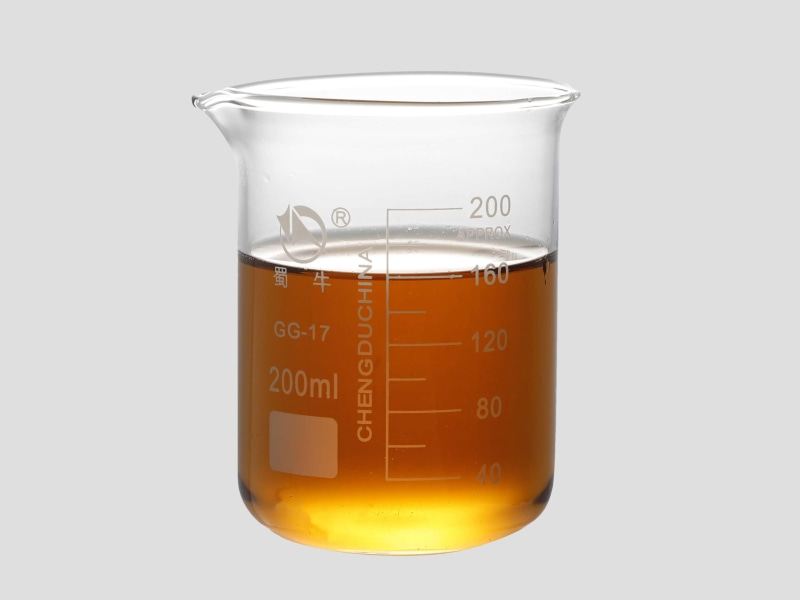
Appearance | Yellow viscous liquid |
pH Value | 7 – 8 |
Viscosity (mPa·s) | < 1200 |
Density (g/cm³) | 1.03 – 1.12 |
It is best to add RT-31392 during the final stage of the waterborne paint manufacturing process
Standard Waterborne Coatings: 0.1% – 1.0% on total formulation (typical reference: 0.3% – 0.6%)
High-Risk Substrates (Weld Seams, Cast Iron, Carbon Steel): 1.0% – 2.0% on total formulation
Flash rust prevention is essential for high-quality waterborne industrial coatings.
For technical data sheets, sample requests, or custom formulation support, contact our technical service team:
Email: Jeffrey@rk-chem.com
Websites:


Ruike’ growing reputation in the industry is largely attributed to its commitment to provide a wide range of products and highly specialized service.
No.160-11,Xiangyuan Road,Jingjin Science and Technology Valley Inductrial Park,Wuqing District,Tianjin Province,China
jeffrey@rk-chem.com
+86 18526852692
 English
 English
 Russian
 French
 Spanish
 Portuguese
 Arabic